By Eric Mahler Author, The Center of the Compass | Keynote Speaker | Founder, Aretos Advisory
Most advice about resilience is really just advice about endurance. Push through. Stay strong. Don’t quit. It treats resilience as a matter of how much weight you can carry before you break.
I think that’s the wrong question. The leaders who actually hold up under real pressure over long periods aren’t the ones who can carry the most weight. They’re the ones who know what to do with weight once it lands on them. There’s a difference between being strong enough to hold something and being smart enough to know you shouldn’t be holding it in the first place.
That difference comes down to three decisions, made over and over, usually without anyone naming them out loud: what to absorb, what to distribute, and what to release.
Absorb
Some weight is genuinely yours to carry. A hard decision that only you have the authority to make. A piece of bad news that has to land with you first before anyone else hears it. Absorbing isn’t a failure of delegation, it’s part of the job, and pretending otherwise doesn’t make you resilient, it makes you someone who’s quietly offloading things that were never anyone else’s to carry.
The mistake isn’t absorbing weight. It’s absorbing weight indiscriminately, treating every piece of pressure that reaches you as something you personally have to hold, whether or not that’s actually true.
Distribute
Some weight isn’t yours alone. It belongs to a team, and carrying it by yourself doesn’t protect anyone, it just means one person is quietly overloaded while everyone else operates without the full picture. Distributing weight well is different from delegating tasks. It means being honest about what’s actually happening, giving people enough context to genuinely share the load rather than just executing pieces of it blind.
Most leaders are worse at this than they think, because distributing weight requires admitting you can’t or shouldn’t carry something alone. That’s a harder admission than it sounds like, especially for anyone who’s built a career on being the person who handles things.
Release
Some weight was never meant to be carried at all. An outcome you don’t control. A decision someone else made that you’re still replaying. A version of a plan that didn’t survive contact with reality and doesn’t need to be mourned indefinitely. Releasing is the hardest of the three, because it isn’t really about logistics, it’s about letting go of something your mind wants to keep holding, usually because holding it feels like responsibility, even when it’s actually just weight with nowhere useful to go.
Why this matters more than endurance
The problem with treating resilience as pure endurance is that it has no ceiling until it suddenly does. You can absorb weight indefinitely, right up until you can’t, and there’s rarely a clear warning between “handling it” and “breaking under it.” The Weight Test is useful precisely because it interrupts that pattern. It forces a decision, in the moment, about which category a given piece of pressure actually belongs to, instead of defaulting to absorbing everything because that’s what feels like strength.
In practice, most people are strong in exactly one of the three. The over-absorbers carry everything themselves and call it dedication, right up until they burn out or start making worse decisions under accumulated weight they never examined. The over-distributors offload things that were genuinely theirs to carry, and it reads as delegation until people notice the pattern. The over-releasers let go of things too early, including things that needed real attention, and call it resilience when it’s closer to avoidance.
A way to use this
The next time something lands on you, a piece of bad news, a hard decision, a problem that isn’t fully resolved, pause before you react to it, and ask honestly which of the three it actually is. Not which one feels natural to you by habit. Which one it actually is, given what the situation calls for.
That single pause is usually enough to catch the pattern you default to without noticing. And once you can see the pattern, you can start making the choice deliberately instead of automatically, which is closer to what real resilience looks like than simply being able to carry more than the person next to you.
About Eric Mahler
Eric Mahler is the founder and Managing Partner of Aretos Advisory, an executive advisory firm focused on transformation, AI governance, and leadership coherence. He has spent thirty years advising boards and executive teams across industries, including roles at Merrill Lynch, Southwest Airlines, Northwest Airlines, and Cap Gemini, and as the founder of Fulcrum Consulting, which he built and exited in 2024.
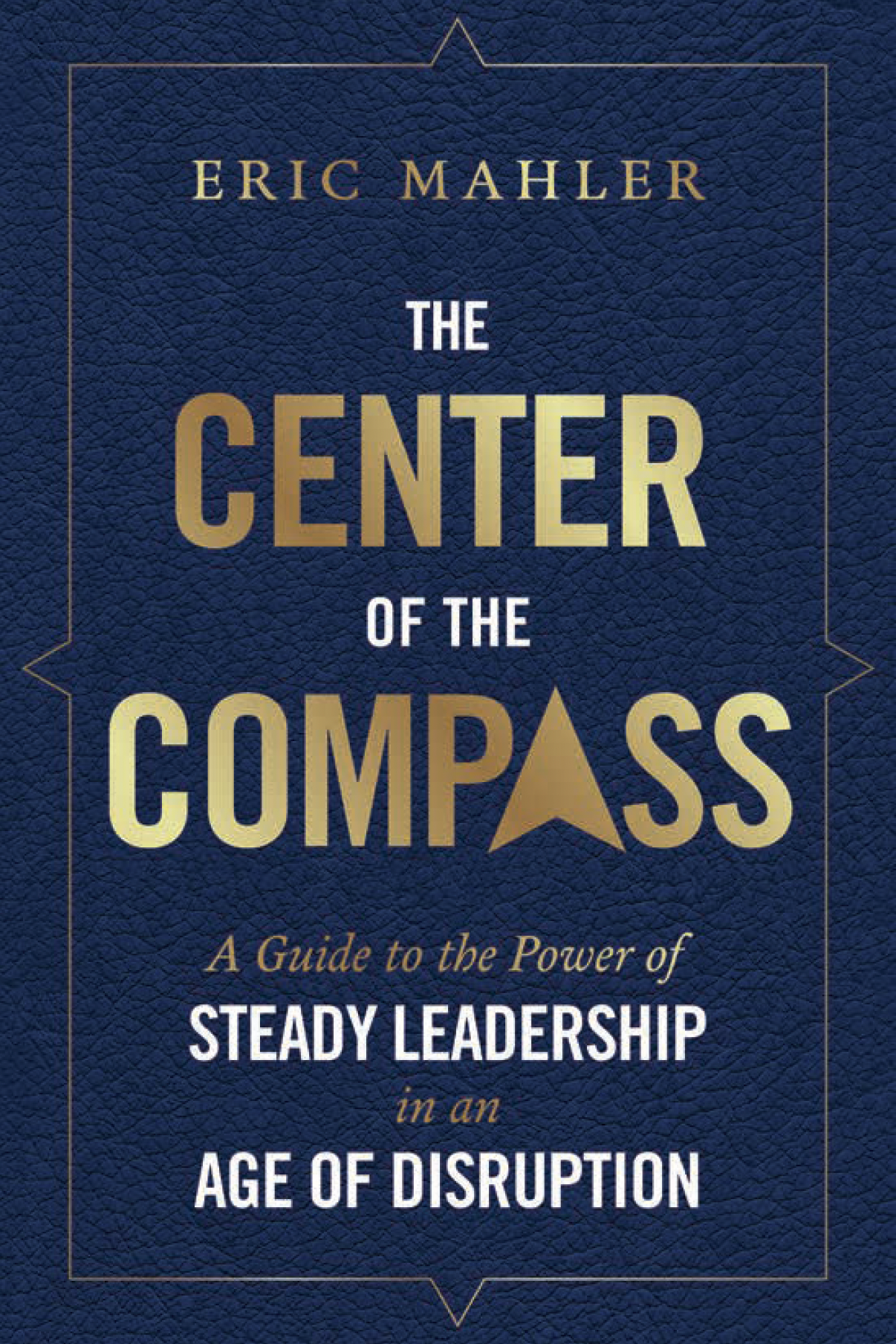
He is the author of The Center of the Compass, forthcoming from Amplify Publishing in December 2026, endorsed by Marshall Goldsmith, David Horsager, and Josh Linkner. He is also a keynote speaker on leadership, AI governance, and organizational resilience.
ericmahler.com | aretosadvisory.com
Connect with Eric on LinkedIn
© 2026 Eric Mahler. All rights reserved.